

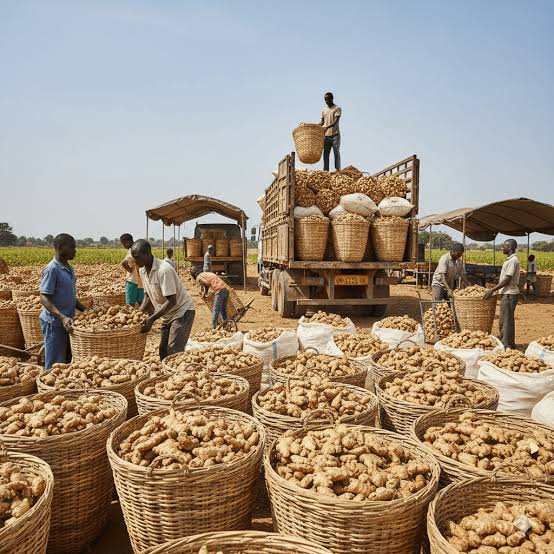
Programme Overview
The "Aggregation Programme," executed by Conyx Farms, was designed to bridge the gap between smallholder farmers and formal agricultural markets. By consolidating produce from multiple farming communities across key producing regions, we created a structured supply chain that ensures consistent quality, volume reliability, and fair market access for participating farmers.
The programme was initiated in response to the fragmented nature of smallholder farming, where individual farmers face significant challenges in accessing buyers, meeting quality standards, and securing competitive prices. Our intervention provided the necessary infrastructure, training, and logistical support to transform these fragmented outputs into a cohesive, market-ready supply.
Communities & Farmer Network
The programme engaged over 500 smallholder farmers across 12 farming communities in key producing regions. These communities were selected based on their agricultural potential, crop specialization, and existing farmer cooperative structures.
We established dedicated aggregation centres in each community, equipped with weighing scales, sorting tables, and temporary storage facilities. These centres serve as the primary collection points where farmers deliver their harvest for grading, consolidation, and onward transportation.
Scope of Work
1. Farmer Training & Capacity Building: Conducted training sessions on Good Agricultural Practices (GAP), including proper planting techniques, pest management, irrigation scheduling, and harvest timing. We also provided guidance on post-harvest handling to minimize losses and preserve produce quality.
2. Quality Assurance & Grading: Implemented a standardized grading system to classify produce based on size, colour, ripeness, and defect tolerance. All produce was inspected upon delivery to aggregation centres, with only grade-A and grade-B produce accepted for buyer shipments.
3. Consolidation & Aggregation: Coordinated the collection, consolidation, and bulk packaging of produce from multiple farmers into uniform lots. This approach enabled us to achieve the volume consistency required by large-scale off-takers, including exporters, processors, and wholesale distributors.
4. Post-Harvest Handling & Logistics: Managed all post-harvest activities, including cleaning, sorting, packaging, cold chain storage, and transportation. We deployed refrigerated trucks for perishable produce to maintain freshness and extend shelf life during transit.
5. Market Linkage & Off-Taker Engagement: Established long-term supply agreements with buyers, ensuring guaranteed offtake for participating farmers. We negotiated competitive farmgate prices and facilitated timely payments to farmers upon delivery.
Volume Handled & Buyer Outcomes
Over the course of the programme, we successfully aggregated and supplied over 2,500 metric tonnes of premium produce to our network of off-takers. This included staple crops, vegetables, and specialty produce tailored to buyer specifications.
Buyers benefited from consistent supply volumes, reduced procurement complexity, and traceable produce with documented quality assurance. The programme eliminated the need for buyers to engage multiple small-scale suppliers, resulting in significant operational efficiencies and cost savings.
Farmer Impact & Social Outcomes
Participating farmers experienced a 35% increase in average income compared to pre-programme levels, driven by improved pricing, reduced post-harvest losses, and access to premium markets. Additionally, farmers gained valuable knowledge in quality management and sustainable farming practices that will continue to benefit their operations beyond the programme.
Outcome
Farmers Reached: 500+ smallholder farmers engaged across 12 communities in key producing regions.
Volume Aggregated: 2,500+ metric tonnes of premium produce consolidated and supplied to off-takers.
Income Increase: Participating farmers saw an average 35% increase in income through improved market access and pricing.
Post-Harvest Loss Reduction: Reduced post-harvest losses from 25% to under 8% through proper handling, cold chain, and timely transportation.
Buyer Satisfaction: 100% of off-takers renewed their supply agreements for the subsequent season, citing consistent quality and reliable volumes.
Farmer Training: 500+ farmers trained in Good Agricultural Practices (GAP) and post-harvest handling techniques.
Infrastructure Established: 12 community aggregation centres equipped with storage, grading, and handling facilities.