
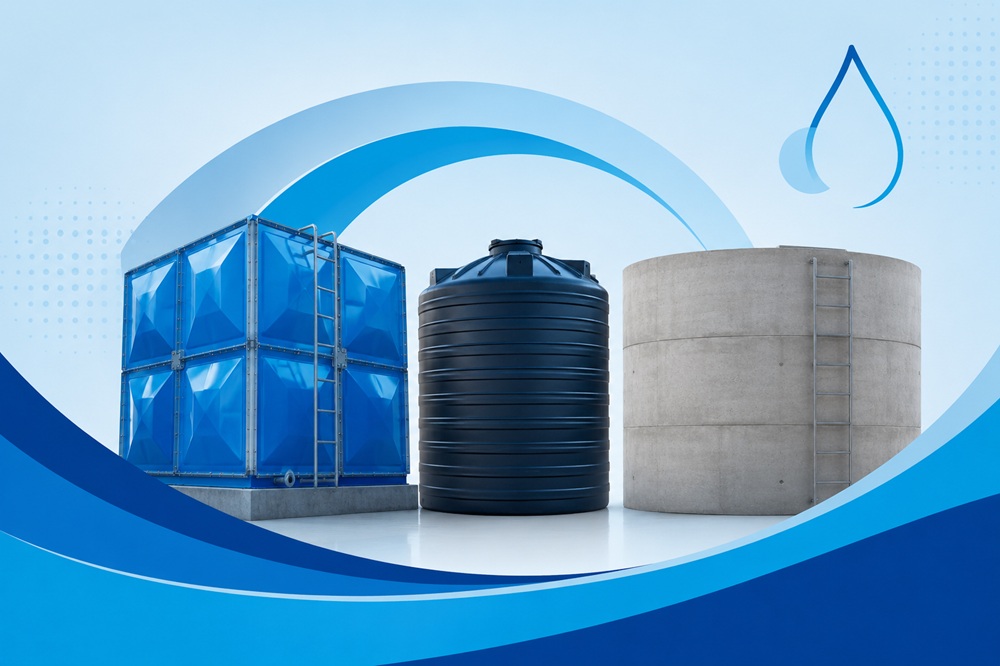
Three storage materials, three different jobs. A practical guide to specifying the right tank for a school, a factory or a farm.
Water storage looks like a commodity decision until the first failure. The material you specify determines how the tank ages, how it is cleaned, what it costs to install and whether it can be moved or extended later.
GRP sectional tanks
Glass-reinforced plastic panels are bolted into a tank on site. Because the tank arrives as flat panels, it can be installed in a plant room or on a roof where a moulded tank simply could not be carried. GRP does not corrode, keeps stored water cool and can be extended by adding panels.
Polyethylene tanks
Moulded tanks are the fastest route to storage for a home or small institution. They are inexpensive and immediately available, but the capacity is fixed and large sizes become awkward to transport and site.
Concrete
Cast reservoirs suit very large, permanent underground storage. They demand civil works, waterproofing and a longer programme.
Specifying well
Start from daily demand and required reserve rather than from a tank size. Confirm the access route, the base or platform, and how the tank will be cleaned. Those three questions decide most specifications.